Itt van az eredeti, de azert bemasolom:
A Few Good Objects
Col. Jessup: You want destructors?
Kaffe: I think I’m entitled.
Col. Jessup: You want destructors?
Kaffe: I want deterministic finalization.
Col Jessup: You can’t handle deterministic finalization!
Pulp Compilers
Vincent: You know what they call a switch statement in VB?
Jules: They don’t call it a switch statement?
Vincent: No man, this is the same language that has an AndAlso operator.
Jules: Then what do they call it?
Vincent: They call it a Select Case.
Full Metal Packet
Gunnery Sargent Hartman: My orders are to weed out all non-hackers who do not pack the chops to serve on my beloved accounting package software project. Do you maggots understand that?
Star Warez
[R2-D2 and Chewbacca are pair programming aboard the Millennium Falcon]
Chewbacca: Wurgleaaaaaaaghooooo!
C-3PO: It’s legal syntax. Screaming about it won’t help you.
Han Solo: Delete it. It’s not wise to upset a wookie.
C-3PO: But sir, nobody worries about upsetting a droid.
Han Solo: That’s because droids don’t pull people’s arms out of their sockets over bad code. Wookies are known to do that.
Chewbacca: Rrrrroo.
C-3PO: I see your point, sir. I suggest a new strategy , R2. Let the wookie take the keyboard.
Lord Of The Token Rings
Aragorn: Are you frightened?
Frodo: Yes.
Aragorn: Not nearly frightened enough. I know your bug count.
Null Terminator 2
Terminator: I need your source code, your compiler, and your static code analysis tools.
Biker: You forgot to say please…
Bridge Pattern Over The River Kwai
Colnel Saito: Do not speak to me of rules! This is software programming! This is not a game of cricket!
2001: The Speech Recognition Odyssey
Dave: Open the pod bay doors, HAL.
HAL: What did you say about Bombay, Dave?
Dave: I said open the pod bay doors, HAL.
HAL: I don’t know anyone named Doris, Dave.
Dave: Give me a freakin’ keyboard!
Tuesday, October 04, 2005
Sunday, August 28, 2005

Saturday, August 27, 2005
Szomszedos szamok kihuzasanak valoszinusege
A MathForge-on van egy hir Konstantinos Drakakis irasarol, amiben leirja hogyan lehet kiszamolni annak a valoszinuseget, hogy m szambol n-et kihuzva lesz koztuk 2 szomszedos.
Az elso megoldas szerint: p(n,m)=1-[C(n-m+1, m)]/[C(n,m)], ahol C(n,m) n elem m-edosztalyu kombinacioja, azaz n!/((m!*(n-m)!)
Az otoslottonal ezek szerint annak az eselye, hogy szomszedos szamokat is kihuznak 21%, a hatoslottonal 53%.
A szerencsejatek rt. oldalan talalhato tobbeves statisztikat megvizsgalva az jott ki, hogy valoban az otoslottonal az elmult 2529 huzasbol 572-szer szerepeltek szomszedos szamok, ami 23%. A hatoslottonal 694 huzasbol 381-szer fordult elo, ami 55%.
Mivel itt eleg nagy szamok faktorialisait kene kiszamolni nem maradhat el az egyszerusites, aminel pedig ezt kapjuk:
p(n,m) = 1 - [(k-1)*(k-2)*...(k-m+1)]/[n*(n-1)*...*(k+1)], ahol k=n-m+1
peldaul:
p(90,5) = 1 - [82*83*84*85]/[87*88*89*90]
p(45,6) = 1 - [35*36*37*38*39]/[41*42*43*44*45]
Az elso megoldas szerint: p(n,m)=1-[C(n-m+1, m)]/[C(n,m)], ahol C(n,m) n elem m-edosztalyu kombinacioja, azaz n!/((m!*(n-m)!)
Az otoslottonal ezek szerint annak az eselye, hogy szomszedos szamokat is kihuznak 21%, a hatoslottonal 53%.
A szerencsejatek rt. oldalan talalhato tobbeves statisztikat megvizsgalva az jott ki, hogy valoban az otoslottonal az elmult 2529 huzasbol 572-szer szerepeltek szomszedos szamok, ami 23%. A hatoslottonal 694 huzasbol 381-szer fordult elo, ami 55%.
Mivel itt eleg nagy szamok faktorialisait kene kiszamolni nem maradhat el az egyszerusites, aminel pedig ezt kapjuk:
p(n,m) = 1 - [(k-1)*(k-2)*...(k-m+1)]/[n*(n-1)*...*(k+1)], ahol k=n-m+1
peldaul:
p(90,5) = 1 - [82*83*84*85]/[87*88*89*90]
p(45,6) = 1 - [35*36*37*38*39]/[41*42*43*44*45]

Friday, August 26, 2005
Wednesday, August 24, 2005
Oracle's OTN TechCasts
This page displays the RSS feed for Oracle's OTN TechCasts.
Jelenleg ezek hallgathatok:
Getting Started with Oracle HTML DB
Open Source and the Changing Developer Tools Marke
A Quick Tour of Zend Core for Oracle
Ask Tom: One on One with Tom Kyte
BPEL: What It Is, What It Isn't
Dr. DBA, What's New in Release 2?
Using Oracle Developer Tools for Visual Studio .NET
Oracle on Apple Mac OS X: The Power and the Glory
Understanding Oracle's New Eclipse EJB 3.0 Tools
Jelenleg ezek hallgathatok:
Getting Started with Oracle HTML DB
Open Source and the Changing Developer Tools Marke
A Quick Tour of Zend Core for Oracle
Ask Tom: One on One with Tom Kyte
BPEL: What It Is, What It Isn't
Dr. DBA, What's New in Release 2?
Using Oracle Developer Tools for Visual Studio .NET
Oracle on Apple Mac OS X: The Power and the Glory
Understanding Oracle's New Eclipse EJB 3.0 Tools
Wednesday, August 10, 2005
Atsushi Eno: the "true" Checklists: XML Performance
While I knew that there are some documents named "Patterns and Practices" from Microsoft, I didn't know that there is a section for XML Performance. Sadly, I was scarcely satisfied by that document. The checklist is so insufficient, and some of them are missing the points (and some are even worse for performance). So here I put the "true" checklists to save misinformed .NET XML developers.
Friday, July 29, 2005
ECMA
Ecma International is an industry association founded in 1961 and dedicated to the standardization of Information and Communication Technology (ICT) and Consumer Electronics (CE).
Itt van az lista
nehany pelda:
ECMA-334 C# Language Specification, 3rd edition (June 2005) [pdf]
ECMA-335 Common Language Infrastructure (CLI), 3rd edition (June 2005) [pdf]
ECMA-367 Eiffel analysis, design and programming Language (June 2005) [pdf]
Itt van az lista
nehany pelda:
ECMA-334 C# Language Specification, 3rd edition (June 2005) [pdf]
ECMA-335 Common Language Infrastructure (CLI), 3rd edition (June 2005) [pdf]
ECMA-367 Eiffel analysis, design and programming Language (June 2005) [pdf]
Monday, July 25, 2005
Matek konyvek a Kempelen Farkas Hallgatoi Informacios Kozpont oldalan
Ez az 5 matek konyv olvshato:
Karsai János: Impulzív jelenségek modelljei
Lovász László: Kombinatorikai problémák és feladatok
Matematikai mozaik
Stoyan Gisbert, Takó Galina: Numerikus módszerek I.
Új matematikai mozaik
Karsai János: Impulzív jelenségek modelljei
Lovász László: Kombinatorikai problémák és feladatok
Matematikai mozaik
Stoyan Gisbert, Takó Galina: Numerikus módszerek I.
Új matematikai mozaik
Sunday, July 24, 2005
The Puzzlet Page
Enjoy mental workouts?
Use maths occasionally?
Like numerical brainteasers?
Revel in intellectual challenges?
Dabble in computer programming?
Answer "yes" to any of the above, and you've come to the right place!
What is a Puzzlet?
A mathematical problem which will almost always require the use of a simple computer program to solve.
You will need at least a rudimentary knowledge of maths to solve it, and occasionally more. You can use this skill to understand the problem, derive a formula to resolve it if necessary, and define the range within which the answer should fall.
At this stage, you will usually be unable to derive an exact answer, and will have to resort to a simple computer program to go further. You'll have to develop an algorithm, write the code, debug it, and get it to run.
Finally, you need to test your answer for accuracy and completeness. Many Puzzlets have several answers, and part of the challenge is to be sure you've found them all. That, then, is the complete Puzzlet experience!
Itt van peldaul a 151-es:
Look at the prime number 3137. If one digit at a time is deleted, we generate the "sub-numbers" 137, 337, 317, 313. All four new of the sub-numbers are also prime,or sub-primes. Are there any more 4-digit primes which behave in exactly the same way?
Use maths occasionally?
Like numerical brainteasers?
Revel in intellectual challenges?
Dabble in computer programming?
Answer "yes" to any of the above, and you've come to the right place!
What is a Puzzlet?
A mathematical problem which will almost always require the use of a simple computer program to solve.
You will need at least a rudimentary knowledge of maths to solve it, and occasionally more. You can use this skill to understand the problem, derive a formula to resolve it if necessary, and define the range within which the answer should fall.
At this stage, you will usually be unable to derive an exact answer, and will have to resort to a simple computer program to go further. You'll have to develop an algorithm, write the code, debug it, and get it to run.
Finally, you need to test your answer for accuracy and completeness. Many Puzzlets have several answers, and part of the challenge is to be sure you've found them all. That, then, is the complete Puzzlet experience!
Itt van peldaul a 151-es:
Look at the prime number 3137. If one digit at a time is deleted, we generate the "sub-numbers" 137, 337, 317, 313. All four new of the sub-numbers are also prime,or sub-primes. Are there any more 4-digit primes which behave in exactly the same way?
Friday, July 22, 2005
Paul J. Leach: UUIDs and GUIDs (February 4, 1998)
This specification defines the format of UUIDs (Universally Unique IDentifier), also known as GUIDs (Globally Unique IDentifier).
Raymond Chen: Computing the size of a directory is more than just adding file sizes
One might think that computing the size of a directory would be a simple matter of adding up the sizes of all the files in it.
Oh if it were only that simple.
There are many things that make computing the size of a directory difficult, some of which even throw into doubt the even existence of the concept "size of a directory".
Itt van a listaja.
Oh if it were only that simple.
There are many things that make computing the size of a directory difficult, some of which even throw into doubt the even existence of the concept "size of a directory".
Itt van a listaja.
Tuesday, July 19, 2005
Scott Mitchell: What Are .NET Web Services?
Itt van a ppt file es itt a blog bejegyezese.
This talk will examine the fundamentals of Web services from a beginner's perspective, focusing on the goals of Web services and common uses of Web services in industry today. It Includes a high-level look at the core Web service standards, along with live demos illustrating how to create a Web service and client application using Visual Studio .NET.
This talk will examine the fundamentals of Web services from a beginner's perspective, focusing on the goals of Web services and common uses of Web services in industry today. It Includes a high-level look at the core Web service standards, along with live demos illustrating how to create a Web service and client application using Visual Studio .NET.
Windows File System Tunneling
Windows NT Contains File System Tunneling Capabilities:
When a name is removed from a directory (rename or delete), its short/long name pair and creation time are saved in a cache, keyed by the name that was removed. When a name is added to a directory (rename or create), the cache is searched to see if there is information to restore. The cache is effective per instance of a directory. If a directory is deleted, the cache for it is removed.
These paired operations can cause tunneling on "name".
- delete(name)/create(name)
- delete(name)/rename(source, name)
- rename(name, newname)/create(name)
- rename(name, newname)/rename(source, name)
The idea is to mimic the behavior MS-DOS programs expect when they use the safe save method. They copy the modified data to a temporary file, delete the original and rename the temporary to the original. This should seem to be the original file when complete. Windows performs tunneling on both FAT and NTFS file systems to ensure long/short file names are retained when 16-bit applications perform this safe save operation.
...
Tunneling cache time can be adjusted from the default time of 15 seconds, or if tunneling capabilities are undesirable, it can be disabled by adding a value in the Windows Registry.
A fenti cikk innen van:
Raymond Chen: The apocryphal history of file system tunnelling
O ezt irja meg:
As another example of the importance of tunneling, consider that file "File with long name.txt", whose short name is say "FILEWI~1.TXT". You load this file into a program that is not long-filename-aware and save it. It deletes the old "FILEWI~1.TXT" and creates a new one with the same name. Without tunnelling, the associated long name of the file would be lost. Instead of a friendly long name, the file name got corrupted into this thing with squiggly marks. Not good.
Illetve leirja, hogy a tunneling kifejezes a quantum mechanikabol lett atveve.
When a name is removed from a directory (rename or delete), its short/long name pair and creation time are saved in a cache, keyed by the name that was removed. When a name is added to a directory (rename or create), the cache is searched to see if there is information to restore. The cache is effective per instance of a directory. If a directory is deleted, the cache for it is removed.
These paired operations can cause tunneling on "name".
- delete(name)/create(name)
- delete(name)/rename(source, name)
- rename(name, newname)/create(name)
- rename(name, newname)/rename(source, name)
The idea is to mimic the behavior MS-DOS programs expect when they use the safe save method. They copy the modified data to a temporary file, delete the original and rename the temporary to the original. This should seem to be the original file when complete. Windows performs tunneling on both FAT and NTFS file systems to ensure long/short file names are retained when 16-bit applications perform this safe save operation.
...
Tunneling cache time can be adjusted from the default time of 15 seconds, or if tunneling capabilities are undesirable, it can be disabled by adding a value in the Windows Registry.
A fenti cikk innen van:
Raymond Chen: The apocryphal history of file system tunnelling
O ezt irja meg:
As another example of the importance of tunneling, consider that file "File with long name.txt", whose short name is say "FILEWI~1.TXT". You load this file into a program that is not long-filename-aware and save it. It deletes the old "FILEWI~1.TXT" and creates a new one with the same name. Without tunnelling, the associated long name of the file would be lost. Instead of a friendly long name, the file name got corrupted into this thing with squiggly marks. Not good.
Illetve leirja, hogy a tunneling kifejezes a quantum mechanikabol lett atveve.
Monday, July 18, 2005
Andrew D. Birrell: An Introduction to Programming with C# Threads
Itt van a pdf (41 oldal).
CONTENTS
1. Introduction
2. Why use concurrency?
3. The design of a thread facility
4. Using Locks: accessing shared data
5. Using Wait and Pulse: scheduling shared resources
6. Using Threads: working in parallel
7. Using Interrupt: diverting the flow of control
8. Additional techniques
9. Advanced C# Features
10. Building your program
11. Concluding remarks
CONTENTS
1. Introduction
2. Why use concurrency?
3. The design of a thread facility
4. Using Locks: accessing shared data
5. Using Wait and Pulse: scheduling shared resources
6. Using Threads: working in parallel
7. Using Interrupt: diverting the flow of control
8. Additional techniques
9. Advanced C# Features
10. Building your program
11. Concluding remarks
Wednesday, July 13, 2005
Saturday, July 09, 2005
Mérő László: A játékelmélet és a racionalitás pszichológiája (Élet és Tudomány - Sulinet)
Amikor egy hosszú sorozat végére pontot tesz a szerkesztő, természetesen egy kicsit büszke: a lap történelme ismét gazdagabb lett egy fejezettel. De némi szomorúságot is érez, még ha közben a mindenki másképp egyforma könyv alakban is megjelent, s olvasónknak igy bőségesen módjában áll kalandozni a játékelmélet és a racionalitás pszichológiája világában. Mérő László lapunkban nem művének zanzáját közölte, hanem alkalmasan kiválasztott részleteiből egy önálló ívet épített.
1. A Dollárárverés ördögi spirálja
2. A pózolás
3. Marsbéli etikák
4. A főszereplő megjelenik
5. A fogoly dilemmája
6. A közlegelők problémája
7. Fogolydilemmák az életben
8. Az aranyszabály és a szeretet csapdái
9. „Az értelemig és tovább...”
10. Jobb ma egy veréb?
11. Kollektív racionalitás
12. Nem mind fénylik, ami arany
13. Sok út vezet a nirvánába
1. A Dollárárverés ördögi spirálja
2. A pózolás
3. Marsbéli etikák
4. A főszereplő megjelenik
5. A fogoly dilemmája
6. A közlegelők problémája
7. Fogolydilemmák az életben
8. Az aranyszabály és a szeretet csapdái
9. „Az értelemig és tovább...”
10. Jobb ma egy veréb?
11. Kollektív racionalitás
12. Nem mind fénylik, ami arany
13. Sok út vezet a nirvánába
Wednesday, July 06, 2005
[ingyen konyv] Andrew Troelsen: COM and .NET Interoperability
Apress Publishing has provided TheServerSide.NET with COM and .NET Interoperability for free download.
"COM and .NET Interoperability" covers working with COM components in .NET and .NET components in COM from basic topics like Runtime Callable Wrappers to advanced topics such as manual marshaling of data types between .NET and COM. This book is available in its entirety as a download to registered TSS.NET readers.

Download the FREE Book
Contents:
Chapter 1 Understanding Platform Invocation Services
Chapter 2 The Anatomy of a COM Server
Chapter 3 A Primer on COM Programming Frameworks
Chapter 4 COM Type Information
Chapter 5 The Anatomy of a .NET Server
Chapter 6 .NET Types
Chapter 7 .NET-to-COM Interoperability — The Basics
Chapter 8 .NET-to-COM Interoperability — Intermediate Topics
Chapter 9 .NET-to-COM Interoperability — Advanced Topics
Chapter 10 COM-to-.NET Interoperability — The Basics
Chapter 11 COM-to-.NET Interoperability — Intermediate Topics
Chapter 12 COM-to-.NET Interoperability — Advanced Topics
Chapter 13 Building Serviced Components (COM+ Interop)
"COM and .NET Interoperability" covers working with COM components in .NET and .NET components in COM from basic topics like Runtime Callable Wrappers to advanced topics such as manual marshaling of data types between .NET and COM. This book is available in its entirety as a download to registered TSS.NET readers.
Download the FREE Book
Contents:
Chapter 1 Understanding Platform Invocation Services
Chapter 2 The Anatomy of a COM Server
Chapter 3 A Primer on COM Programming Frameworks
Chapter 4 COM Type Information
Chapter 5 The Anatomy of a .NET Server
Chapter 6 .NET Types
Chapter 7 .NET-to-COM Interoperability — The Basics
Chapter 8 .NET-to-COM Interoperability — Intermediate Topics
Chapter 9 .NET-to-COM Interoperability — Advanced Topics
Chapter 10 COM-to-.NET Interoperability — The Basics
Chapter 11 COM-to-.NET Interoperability — Intermediate Topics
Chapter 12 COM-to-.NET Interoperability — Advanced Topics
Chapter 13 Building Serviced Components (COM+ Interop)
[ingyen konyv] Aaron Skonnard, Martin Gudgin: Essential XML Quick Reference
Essential XML Quick Reference: A Programmer's Reference to XML, XPath, XSLT, XML Schema, SOAP, and More
Addison-Wesley and Developmentor have provided TheServerSide.NET with the entire book of Essential XML Quick Reference for free download. Essential XML Quick Reference is for anyone working with today's mainstream XML technologies. It was specifically designed to serve as a handy but thorough quick reference that answers the most common XML-related technical questions.It goes beyond the traditional pocket reference design by providing complete coverage of each topic along with plenty of meaningful examples. Each chapter provides a brief introduction, which is followed by the detailed reference information. This approach assumes the reader has a basic understanding of the given topic.The detailed outline (at the beginning), index (in the back), bleeding tabs (along the side), and the page headers/footers were designed to help readers quickly find answers to their questions.

Download the FREE PDF
Addison-Wesley and Developmentor have provided TheServerSide.NET with the entire book of Essential XML Quick Reference for free download. Essential XML Quick Reference is for anyone working with today's mainstream XML technologies. It was specifically designed to serve as a handy but thorough quick reference that answers the most common XML-related technical questions.It goes beyond the traditional pocket reference design by providing complete coverage of each topic along with plenty of meaningful examples. Each chapter provides a brief introduction, which is followed by the detailed reference information. This approach assumes the reader has a basic understanding of the given topic.The detailed outline (at the beginning), index (in the back), bleeding tabs (along the side), and the page headers/footers were designed to help readers quickly find answers to their questions.
Download the FREE PDF
Tuesday, July 05, 2005
Justin Rogers: Understanding and Solving Internet Explorer Leak Patterns
In the past, memory leaks haven't posed huge problems for Web developers. Pages were kept relatively simple and navigation between different locations within a site was a great way to clean up any loose memory. If there was a leak, it was most likely small enough to go unnoticed.
New Web applications live up to higher standards. A page might run for hours without being navigated and retrieve updated information dynamically through Web services. Language features are pushed to the breaking point by combining complex event schemes, object-oriented JScript, and closures to produce entire applications. With these and other changes, certain memory leak patterns are becoming more prominent, especially those previously hidden by navigation.
The good news is that memory leak patterns can be easily spotted if you know what to look for. Most of the troublesome patterns you might face have known workarounds requiring only a small amount of extra work on your behalf. While some pages might still fall prey to small memory leaks, the most noticeable ones can be easily removed.
The following sections will discuss patterns of memory leaks and point out some common examples of each pattern.:
Circular References — When mutual references are counted between Internet Explorer's COM infrastructure and any scripting engine, objects can leak memory. This is the broadest pattern.
Closures — Closures are a specific form of circular reference that pose the largest pattern to existing Web application architectures. Closures are easy to spot because they rely on a specific language keyword and can be searched for generically. Eric Lippert, one of the developers of the scripting engines, has a great post on closures in general.
Cross-Page Leaks — Cross-page leaks are often very small leaks of internal book-keeping objects as you move from site to site. We'll examine the DOM Insertion Order issue, along with a workaround that shows how small changes to your code can prevent the creation of these book-keeping objects.
Pseudo-Leaks — These aren't really leaks, but can be extremely annoying if you don't understand where your memory is going. We'll examine the script element rewriting and how it appears to leak quite a bit of memory, when it is really performing as required.
In the interest of patterns and design I highly recommend Scott's short blog entry because it demonstrates a general purpose example of removing all closure-based leaks.
Innen jott a link: Joel Webber: Another Word or Two on Memory Leaks
New Web applications live up to higher standards. A page might run for hours without being navigated and retrieve updated information dynamically through Web services. Language features are pushed to the breaking point by combining complex event schemes, object-oriented JScript, and closures to produce entire applications. With these and other changes, certain memory leak patterns are becoming more prominent, especially those previously hidden by navigation.
The good news is that memory leak patterns can be easily spotted if you know what to look for. Most of the troublesome patterns you might face have known workarounds requiring only a small amount of extra work on your behalf. While some pages might still fall prey to small memory leaks, the most noticeable ones can be easily removed.
The following sections will discuss patterns of memory leaks and point out some common examples of each pattern.:
Circular References — When mutual references are counted between Internet Explorer's COM infrastructure and any scripting engine, objects can leak memory. This is the broadest pattern.
Closures — Closures are a specific form of circular reference that pose the largest pattern to existing Web application architectures. Closures are easy to spot because they rely on a specific language keyword and can be searched for generically. Eric Lippert, one of the developers of the scripting engines, has a great post on closures in general.
Cross-Page Leaks — Cross-page leaks are often very small leaks of internal book-keeping objects as you move from site to site. We'll examine the DOM Insertion Order issue, along with a workaround that shows how small changes to your code can prevent the creation of these book-keeping objects.
Pseudo-Leaks — These aren't really leaks, but can be extremely annoying if you don't understand where your memory is going. We'll examine the script element rewriting and how it appears to leak quite a bit of memory, when it is really performing as required.
In the interest of patterns and design I highly recommend Scott's short blog entry because it demonstrates a general purpose example of removing all closure-based leaks.
Innen jott a link: Joel Webber: Another Word or Two on Memory Leaks
Wednesday, June 29, 2005
Tuesday, June 28, 2005
Google Earth
The idea is simple. It’s a globe that sits inside your PC. You point and zoom to anyplace on the planet that you want to explore. Satellite images and local facts zoom into view. Tap into Google search to show local points of interest and facts. Zoom to a specific address to check out an apartment or hotel. View driving directions and even fly along your route. We invite you to try it now.
Google Earth is free for personal use. No registration is required.
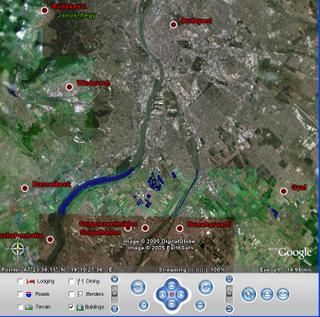
Elso probalkozasok:



Google Earth is free for personal use. No registration is required.
Elso probalkozasok:


Sunday, June 26, 2005
XSS cheatsheet
If you don't know how XSS (Cross Site Scripting) works, this page probably won't help you. This page is for people who already understand the basics of XSS but want a deep understanding of the nuances regarding filter evasion. This page will also not show you how to mitigate these risks or how to write the actual cookie/credential stealing portion of the attack. It will simply show the underlying attack vectors and you can infer the rest.
Saturday, June 25, 2005
malicious web sites to spoof dialog boxes
Secunia Research has discovered a vulnerability in various browsers, which can be exploited by malicious web sites to spoof dialog boxes.
The problem is that JavaScript dialog boxes do not display or include their origin, which allows a new window to open e.g. a prompt dialog box, which appears to be from a trusted site.

The vulnerability has been confirmed in Mozilla 1.7.8, FireFox 1.04, and Camino 0.8.4. Prior versions may also be affected.
Solution:
Do not browse untrusted web sites while browsing trusted sites.
The problem is that JavaScript dialog boxes do not display or include their origin, which allows a new window to open e.g. a prompt dialog box, which appears to be from a trusted site.
The vulnerability has been confirmed in Mozilla 1.7.8, FireFox 1.04, and Camino 0.8.4. Prior versions may also be affected.
Solution:
Do not browse untrusted web sites while browsing trusted sites.
Wednesday, June 22, 2005
Connected Files 2: elemei, datoteke, fitxategiak es persze fichiers
Ez meg az elozohoz tartozik:
For some languages, it is possible to use a localized equivalent of _files to create a subfolder for connected files. The following list contains the valid strings that can be appended to a document name to create a connected files subfolder. Note that some of these strings have a "-" character as their first character rather than a "_" or a "." character.
_archivos
_arquivos
_bestanden
_bylos
-Dateien
_datoteke
_dosyalar
_elemei
_failid
_fails
_fajlovi
_ficheiros
_fichiers
-filer
.files
_files
_file
_fitxers
_fitxategiak
_pliki
_soubory
_tiedostot
Ugyan meg ezt is irjak:
For additional information about the Connected Files feature, click the following link to view the Microsoft Web site:
http://msdn.microsoft.com/library/psdk/shellcc/shell/shell_basics/manage.htm#connected
de azota az url-eket megreformaltak es ezen az utvonalon csak ezt kapjuk:
We apologize for the inconvenience, but the location you are seeking cannot be found.
Ez lenne a javitott url: http://msdn.microsoft.com/library/default.asp?url=/library/en-us/shellcc/platform/shell/programmersguide/shell_basics/shell_basics_programming/manage.asp
Irtam nekik errol is, aztan majd meglatjuk javitjak-e.
For some languages, it is possible to use a localized equivalent of _files to create a subfolder for connected files. The following list contains the valid strings that can be appended to a document name to create a connected files subfolder. Note that some of these strings have a "-" character as their first character rather than a "_" or a "." character.
_archivos
_arquivos
_bestanden
_bylos
-Dateien
_datoteke
_dosyalar
_elemei
_failid
_fails
_fajlovi
_ficheiros
_fichiers
-filer
.files
_files
_file
_fitxers
_fitxategiak
_pliki
_soubory
_tiedostot
Ugyan meg ezt is irjak:
For additional information about the Connected Files feature, click the following link to view the Microsoft Web site:
http://msdn.microsoft.com/library/psdk/shellcc/shell/shell_basics/manage.htm#connected
de azota az url-eket megreformaltak es ezen az utvonalon csak ezt kapjuk:
We apologize for the inconvenience, but the location you are seeking cannot be found.
Ez lenne a javitott url: http://msdn.microsoft.com/library/default.asp?url=/library/en-us/shellcc/platform/shell/programmersguide/shell_basics/shell_basics_programming/manage.asp
Irtam nekik errol is, aztan majd meglatjuk javitjak-e.
Connected Files
Az MSDN-ben ezt irjak a SHFileOperation Function alatt:
Connecting Files
With Microsoft Windows 2000 or later, it is possible to connect an HTML file with a folder that contains related files such as Graphics Interchange Format (GIF) images or style sheets. If file connection is enabled, when you move or copy the HTML file, the folder and all of its files are moved or copied as well. Conversely, if you move the folder with the related files, the HTML file is also moved.
The HTML file must have a .htm or .html extension. You create the connection to the related files by placing the folder that contains them into the same folder as the HTML file. The name of the folder that contains the connected files must be the same as the name of the HTML file followed by "_files" or ".files" (this is case sensitive; for example, ".Files" does not work). An example is given here.
1. Create a file named Test.htm in the C:\Files directory (C:\Files\Test.htm).
2. Create a new folder named Test.files in the C:\Files directory (C:\Files\Text.files).
3. Populate the folder with a few files. Any file placed in this folder is connected to Test.htm.
4. Move or copy the Test.htm file to the C:\Files2 directory.
5. Note that the Test.files directory is now found in the C:\Files2 directory as well.
File connection is enabled by default. It can be disabled by adding a REG_DWORD value, NoFileFolderConnection, to this registry key.
HKEY_CURRENT_USER\Software\Microsoft\Windows\CurrentVersion\Explorer\NoFileFolderConnection
Setting NoFileFolderConnection to 1 disables file connection. If the value is set to zero or is missing, file connection is enabled.
Irtam nekik, hogy a peldajuk masodik pontjaban a "C:\Files\Text.files" reszt javitsak ki "C:\Files\Test.files"-re. Majd meglatjuk mi lesz.
Innen jutottam el a SHFileOperation oldalra.
Connecting Files
With Microsoft Windows 2000 or later, it is possible to connect an HTML file with a folder that contains related files such as Graphics Interchange Format (GIF) images or style sheets. If file connection is enabled, when you move or copy the HTML file, the folder and all of its files are moved or copied as well. Conversely, if you move the folder with the related files, the HTML file is also moved.
The HTML file must have a .htm or .html extension. You create the connection to the related files by placing the folder that contains them into the same folder as the HTML file. The name of the folder that contains the connected files must be the same as the name of the HTML file followed by "_files" or ".files" (this is case sensitive; for example, ".Files" does not work). An example is given here.
1. Create a file named Test.htm in the C:\Files directory (C:\Files\Test.htm).
2. Create a new folder named Test.files in the C:\Files directory (C:\Files\Text.files).
3. Populate the folder with a few files. Any file placed in this folder is connected to Test.htm.
4. Move or copy the Test.htm file to the C:\Files2 directory.
5. Note that the Test.files directory is now found in the C:\Files2 directory as well.
File connection is enabled by default. It can be disabled by adding a REG_DWORD value, NoFileFolderConnection, to this registry key.
HKEY_CURRENT_USER\Software\Microsoft\Windows\CurrentVersion\Explorer\NoFileFolderConnection
Setting NoFileFolderConnection to 1 disables file connection. If the value is set to zero or is missing, file connection is enabled.
Irtam nekik, hogy a peldajuk masodik pontjaban a "C:\Files\Text.files" reszt javitsak ki "C:\Files\Test.files"-re. Majd meglatjuk mi lesz.
Innen jutottam el a SHFileOperation oldalra.
Friday, June 17, 2005
celebrate.digitalbrain.com
CELEBRATE is a 30-month, € 5m Information Society Technology project supported by the European Commission. The main task is to create an innovative approach to teaching using eLearning technologies, based on a vision of what electronic content (resources, services and communication tools) may look like in the future.
A key aim of the project is to investigate how LOs can be handled by a new generation of Learning Content Management Systems (LCMS) from a variety of different vendors and to test the interoperability of these systems in a real-life demonstrator. It is intended that CELEBRATE will act as a catalyst for the European eLearning content industry (the entire value-chain including content owners, publishers, broadcasters, national school networks and technology platform vendors).
The project's evaluation activities particularly analyse the extent to which new, more flexible forms of content development and distribution (based on reusable LOs) impact upon the learning process and support a new pedagogy for eLearning in schools based on constructivist learning models. In particular, the project will assess how the use of LOs encourages the development of key ‘digital-age’ skills such as collaborative working, creativity, inter-disciplinary awareness, adaptiveness, intercultural communication and problem-solving.
Rengeteg tananyag kerult fel magyarul. Jelenleg ezeket talaltam:
Biológia:
A harántcsíkolt izom
A HIV-vírus terjedése
A női ciklus
Mendel kísérlete
Párologtatás
A fotoszintézis sötétszakasza
A fotoszintézis fényszakasza
Aktív transzport
Passzív transzportok
Az ember szaporodása
A növények magánélete
Gerincesek rendszer és élettana
Fizika:
A helyzeti energia
A munka
Az energia
Az energiamegmaradás
Felületi hullámok
Homorú tükör
Súlypont
A Nap
Húrok hangja
Pálcák hangja
Doppler-jelenség
Állóhullámok
Arkhimédész törvénye
Hidrosztatika
Elektrosztatika
Kirchhoff I. törvényének alkalmazása
Kirchhoff II. törvényének alkalmazása
A síkkondenzátor
Energia a háztartásban
Önindukció
Fénytörés
Az egyszerű gépek
Vékony lencsék
Súlytalanság
Körmozgás
Szabadesés
Soros RLC-kör
Kondenzátorok kapcsolásai
Áramköri elemek
Áramlások
Kepler I. törvénye
Kepler II. törvénye
Kepler III. törvénye
Maghasadás és láncreakció
Az atombomba
A prizma
Sztatika
Mûszerek kapcsolása
Lámpák és elemek kapcsolásai
Ellenállás
A víz három halmazállapota
Ellenállások kapcsolásai
Dióda
Tranzisztor
Tranzisztorok alkalmazásai
MRI- Orvosi Nobel Díj
Az ÉS kapu
A VAGY kapu
Gyakoribb légköri fényjelenségek
Villám és mennydörgés
A fény diszperziója
A fény diszperziója 2
Csillagászati összefoglalás
Atomfizika
Exponenciális bomlástörvény
Bomlási sorok
Klasszikus atommodellek
Hullámok
A sűrűség
Radioaktivitás
Atommodellek
Kémia:
A kémhatás
Az atomok elektronszerkezete
Galvánelemek
A szén 1 (A természetes módosulatok)
A szén 2 (Az amorf szén)
A periódusos rendszer
Szappanok mosóhatása
Metán
Standardpotenciál
Aluminium
A molekulák szerkezete
A kovalens kötés
Az ionkötés
Matematika:
A parabola
Húrnégyszögek
Középponti és kerületi szögek
Mûveletek vektorokkal
Thalész tétele
Statisztikai adatok és ábrázolásuk
Tizedestörtek
Statisztikai közepek
Adatok szóródása
Körök kölcsönös helyzetei a síkban
Addíciós tételek
A koszinusztétel
A szinusztétel
mértani helyek
A szög mérése
A koszinuszfüggvény
Statisztikai gyakorló feladatok
A szinuszfüggvény
Négyszögek
Az utazó ügynök
Geometria
Geometriai transzformációk
Sir William játékai
Euler hídjai
Gráfokról röviden
Memory
Statisztikai alapfogalmak
Vegyes:
Találd ki Európa
Magyarország megyéi
Európai országok
A tükrök
A szinusz és koszinusz szögfüggvények általánosítása
Ásványvizek
A számítógép
Latin
A számítógép fontosabb hardver részei
Magyar nyelvtan-Helyesírási fejlesztő
Éghajlat
Ázsia földrajza
Az I. világháborút lezáró békerendszer
A légszennyezéssel kapcsolatos anyag
Lemeztektonika
A jég
A key aim of the project is to investigate how LOs can be handled by a new generation of Learning Content Management Systems (LCMS) from a variety of different vendors and to test the interoperability of these systems in a real-life demonstrator. It is intended that CELEBRATE will act as a catalyst for the European eLearning content industry (the entire value-chain including content owners, publishers, broadcasters, national school networks and technology platform vendors).
The project's evaluation activities particularly analyse the extent to which new, more flexible forms of content development and distribution (based on reusable LOs) impact upon the learning process and support a new pedagogy for eLearning in schools based on constructivist learning models. In particular, the project will assess how the use of LOs encourages the development of key ‘digital-age’ skills such as collaborative working, creativity, inter-disciplinary awareness, adaptiveness, intercultural communication and problem-solving.
Rengeteg tananyag kerult fel magyarul. Jelenleg ezeket talaltam:
Biológia:
A harántcsíkolt izom
A HIV-vírus terjedése
A női ciklus
Mendel kísérlete
Párologtatás
A fotoszintézis sötétszakasza
A fotoszintézis fényszakasza
Aktív transzport
Passzív transzportok
Az ember szaporodása
A növények magánélete
Gerincesek rendszer és élettana
Fizika:
A helyzeti energia
A munka
Az energia
Az energiamegmaradás
Felületi hullámok
Homorú tükör
Súlypont
A Nap
Húrok hangja
Pálcák hangja
Doppler-jelenség
Állóhullámok
Arkhimédész törvénye
Hidrosztatika
Elektrosztatika
Kirchhoff I. törvényének alkalmazása
Kirchhoff II. törvényének alkalmazása
A síkkondenzátor
Energia a háztartásban
Önindukció
Fénytörés
Az egyszerű gépek
Vékony lencsék
Súlytalanság
Körmozgás
Szabadesés
Soros RLC-kör
Kondenzátorok kapcsolásai
Áramköri elemek
Áramlások
Kepler I. törvénye
Kepler II. törvénye
Kepler III. törvénye
Maghasadás és láncreakció
Az atombomba
A prizma
Sztatika
Mûszerek kapcsolása
Lámpák és elemek kapcsolásai
Ellenállás
A víz három halmazállapota
Ellenállások kapcsolásai
Dióda
Tranzisztor
Tranzisztorok alkalmazásai
MRI- Orvosi Nobel Díj
Az ÉS kapu
A VAGY kapu
Gyakoribb légköri fényjelenségek
Villám és mennydörgés
A fény diszperziója
A fény diszperziója 2
Csillagászati összefoglalás
Atomfizika
Exponenciális bomlástörvény
Bomlási sorok
Klasszikus atommodellek
Hullámok
A sűrűség
Radioaktivitás
Atommodellek
Kémia:
A kémhatás
Az atomok elektronszerkezete
Galvánelemek
A szén 1 (A természetes módosulatok)
A szén 2 (Az amorf szén)
A periódusos rendszer
Szappanok mosóhatása
Metán
Standardpotenciál
Aluminium
A molekulák szerkezete
A kovalens kötés
Az ionkötés
Matematika:
A parabola
Húrnégyszögek
Középponti és kerületi szögek
Mûveletek vektorokkal
Thalész tétele
Statisztikai adatok és ábrázolásuk
Tizedestörtek
Statisztikai közepek
Adatok szóródása
Körök kölcsönös helyzetei a síkban
Addíciós tételek
A koszinusztétel
A szinusztétel
mértani helyek
A szög mérése
A koszinuszfüggvény
Statisztikai gyakorló feladatok
A szinuszfüggvény
Négyszögek
Az utazó ügynök
Geometria
Geometriai transzformációk
Sir William játékai
Euler hídjai
Gráfokról röviden
Memory
Statisztikai alapfogalmak
Vegyes:
Találd ki Európa
Magyarország megyéi
Európai országok
A tükrök
A szinusz és koszinusz szögfüggvények általánosítása
Ásványvizek
A számítógép
Latin
A számítógép fontosabb hardver részei
Magyar nyelvtan-Helyesírási fejlesztő
Éghajlat
Ázsia földrajza
Az I. világháborút lezáró békerendszer
A légszennyezéssel kapcsolatos anyag
Lemeztektonika
A jég
Sunday, June 12, 2005
Scott Mitchell: Enter and the Button Click Event
Of particular interest to ASP.NET developers, though, is that when creating an ASP.NET Web Form hitting Enter to submit the form seemingly sometimes causes the page's Button Web control's Click event to fire, and other times not. In this short article we'll see under what conditions a Button Web control's Click event might not fire when the user submits the page hitting Enter; furthermore, we'll look at a workaround.
A lenyeg:
The issue centers around the way that Internet Explorer posts back the form's controls when hitting enter in a form with only one single-line textbox. Specifically, Internet Explorer does not include the submit button's name/value pair in the post body. Since the submit button's name/value pair is not sent back, the ASP.NET engine cannot determine what induced the postback and therefore can't raise the appropriate Button Web control's
...
Without the information as to what button caused the postback, the ASP.NET engine cannot raise the corresponding button's
For additional information about Enter and form submission, as well as JavaScript techniques for disabling submissions via Enter and ensuring submissions via Enter (for older browsers), be sure to check out the following articles:
FORM submission and the ENTER key?
Using JavaScript to prevent or trigger form submission when ENTER is hit
FAQs relating to 'Pressing Enter Key for Form Submission'
A lenyeg:
The issue centers around the way that Internet Explorer posts back the form's controls when hitting enter in a form with only one single-line textbox. Specifically, Internet Explorer does not include the submit button's name/value pair in the post body. Since the submit button's name/value pair is not sent back, the ASP.NET engine cannot determine what induced the postback and therefore can't raise the appropriate Button Web control's
Click event....
Without the information as to what button caused the postback, the ASP.NET engine cannot raise the corresponding button's
Click event. Hence, if you have a Web Form with just one single-line text input (even if there are additional input fields, like CheckBoxLists, RadioButtonLists, DropDownLists, and so on), hitting enter in the text input will not cause the Button Web control's Click event to fire when using Internet Explorer - other browsers, such as FireFox, always send back the button's name/value pair, even if there is only one text input.For additional information about Enter and form submission, as well as JavaScript techniques for disabling submissions via Enter and ensuring submissions via Enter (for older browsers), be sure to check out the following articles:
FORM submission and the ENTER key?
Using JavaScript to prevent or trigger form submission when ENTER is hit
FAQs relating to 'Pressing Enter Key for Form Submission'
Saturday, June 11, 2005
Greg Wilson: Top Ten Data Crunching Tips and Tricks
Every day, all over the world, programmers have to recycle legacy data, translate from one vendor's proprietary format into another's, check configuration files, and yank data out of web server logs. This kind of programming is usually called data crunching, and while it's not glamorous, knowing how to do it with the least amount of effort can make the difference between meeting a deadline and making another pot of coffee. These ten tips will take the headache out of crunching data.
1. Master the Classic Tools
2. Separate Input, Processing, and Output
3. Store Format Information in the Data Itself
4. Understand International Character Sets
5. Use Reluctant Matches and Graphical Tools
6. Nest and Subtract to Negate
7. Check for Holes
8. Use XSLT (with Caveats)
9. Use XPath Without Using XSLT
10. Check Your Work
1. Master the Classic Tools
2. Separate Input, Processing, and Output
3. Store Format Information in the Data Itself
4. Understand International Character Sets
5. Use Reluctant Matches and Graphical Tools
6. Nest and Subtract to Negate
7. Check for Holes
8. Use XSLT (with Caveats)
9. Use XPath Without Using XSLT
10. Check Your Work
Subscribe to:
Posts (Atom)